Punjab and Himachal Pradesh
Punjab and Shimla: Hymns and Heights
Sacred India · Mountains
9 nights

Destinations
Himalayan foothills, hill stations and a cooler, quieter pace.
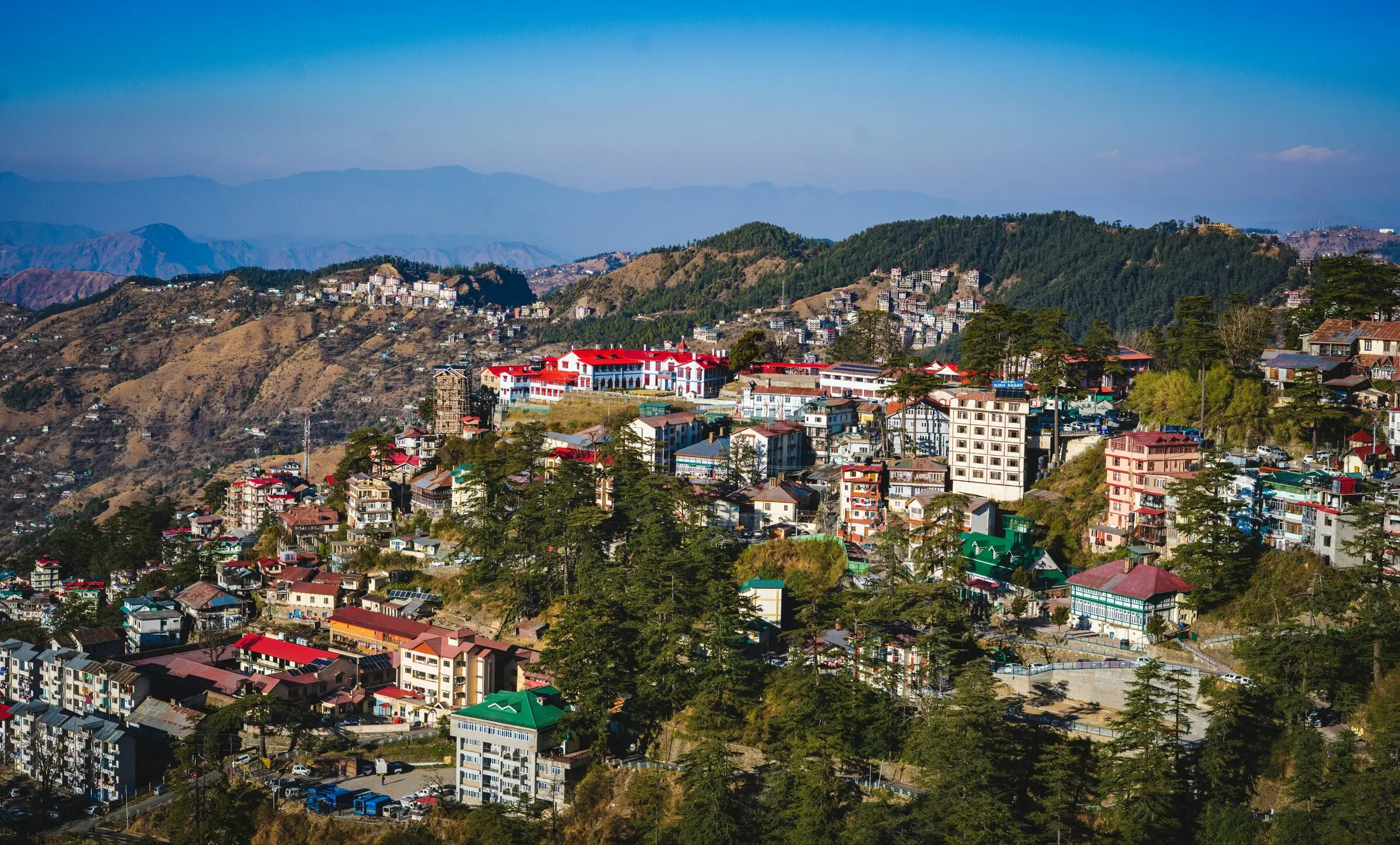
For families wanting mountains rather than heat, Himachal Pradesh offers colonial-era hill stations, valley walks and a genuinely different pace from the plains.
It works well as a cooler final stage of a longer trip, particularly for travellers less used to India's summer temperatures.
The name
Himachal means "snow-laden", from hima (snow) and achal (mountain). The name was suggested by the Sanskrit scholar Acharya Diwakar Datt Sharma when some thirty small hill states were joined together in 1948. The state also calls itself Dev Bhoomi, the land of the gods, after the village deities worshipped in every valley.
Places
The summer capital of British India from 1864. The Mall and the Ridge, Christ Church and the Viceregal Lodge, reached on the UNESCO-listed Kalka-Shimla toy train.
Hadimba Temple in the cedar woods, Old Manali and Solang Valley, and through the Atal Tunnel to the high valley of Lahaul.
Home of the Dalai Lama since 1960, with the Tsuglagkhang temple, the Tibetan Museum, and the walk up to Triund.
A high cold desert of ancient monasteries: Tabo, founded in 996, and Key, above the river. Chandratal Lake, and some of the highest villages in the world.
The tea gardens of Palampur, the ancient Kangra Fort, the rock-cut temples at Masroor and the Baijnath Shiva temple.
Apple orchards beneath Kinner Kailash, and villages such as Kalpa, Sangla and Chitkul, the last before the Tibetan border.
A quiet valley of riverside stays and trout streams, and the way into the Great Himalayan National Park, a UNESCO natural site.
A colonial hill station with old churches, and the Lakshmi Narayan temples of Chamba, known for its embroidered rumals.
The Great Himalayan National Park for the western tragopan and Himalayan tahr, Pin Valley in Spiti for ibex and the rarely seen snow leopard, and the Pong Dam wetland for winter birds.
At the table
The festive meal cooked by traditional chefs and served on leaf plates: rajmah, madra, kadhi and sweet rice.
Steamed wheat bread stuffed with walnuts or poppy seeds, eaten with ghee in Kullu and Manali.
Lamb in a spiced buttermilk gravy, from Chamba.
Fried bread stuffed with black gram.
Fresh from the Beas and Tirthan rivers.
Tibetan food in McLeod Ganj, Bir and Spiti.
Timing
March to June and September to November. The hills invert the plains' calendar: they are the reason to travel in the hot months, and they close down rather than open up in winter, when snow can cut higher roads entirely. The monsoon brings landslides and is the genuine season to avoid.
Jan
9-1 degrees Celsius, typical high and low
Good
Cold, with snow in Shimla and higher. Beautiful, but some roads and passes closed.
Feb
11-2 degrees Celsius, typical high and low
Good
Still cold and snowy. Clear mountain views on good days.
Mar
17-7 degrees Celsius, typical high and low
Ideal
Spring. Rhododendron and orchards in blossom, roads reopening.
Apr
22-11 degrees Celsius, typical high and low
Ideal
Excellent. Warm days, cool nights, everything accessible.
May
25-14 degrees Celsius, typical high and low
Ideal
Peak season, and the reason: comfortable here while the plains are unbearable.
Jun
26-16 degrees Celsius, typical high and low
Ideal
Warm and busy, with monsoon building late in the month.
Jul
22-15 degrees Celsius, typical high and low
Best avoided
Monsoon. Heavy rain, landslides and road closures are routine.
Aug
21-15 degrees Celsius, typical high and low
Best avoided
Wettest month. Mountain roads are genuinely risky.
Sep
22-13 degrees Celsius, typical high and low
Good
Rain clearing from mid-month. Air washed clean, views at their best.
Oct
20-9 degrees Celsius, typical high and low
Ideal
Arguably the finest month. Clear, stable, quiet after the summer crowds.
Nov
16-5 degrees Celsius, typical high and low
Good
Cold and very clear. Higher routes starting to close.
Dec
11-2 degrees Celsius, typical high and low
Good
Winter proper. Snow, short days, some places shut for the season.
October, starting when Dussehra ends elsewhere
Village deities are carried down from surrounding valleys to Kullu in palanquins, hundreds of them, for a week. Distinct from Dussehra anywhere else in India and firmly a local event rather than a spectacle laid on for visitors.
February or March
Tibetan new year, marked in Lahaul, Spiti and the Dharamshala area with monastery ceremonies and masked dance. Winter access to Spiti is limited, so this needs careful planning.
Festival timings shift each year with the lunar calendar, so we have not published dates that would be out of date by the time you read them. See the full calendar for Himachal Pradesh, or tell us the year and we will confirm the dates for you.
Good to know
Journeys
Punjab and Himachal Pradesh
Sacred India · Mountains
9 nights
Tell us about your family and what this trip means to you.