Gujarat
Gujarat: Of Carved Wells and Roaring Forests
Heritage · Wildlife
9 nights

Destinations
Heritage journeys, textiles, and a region many British Indian families call home.
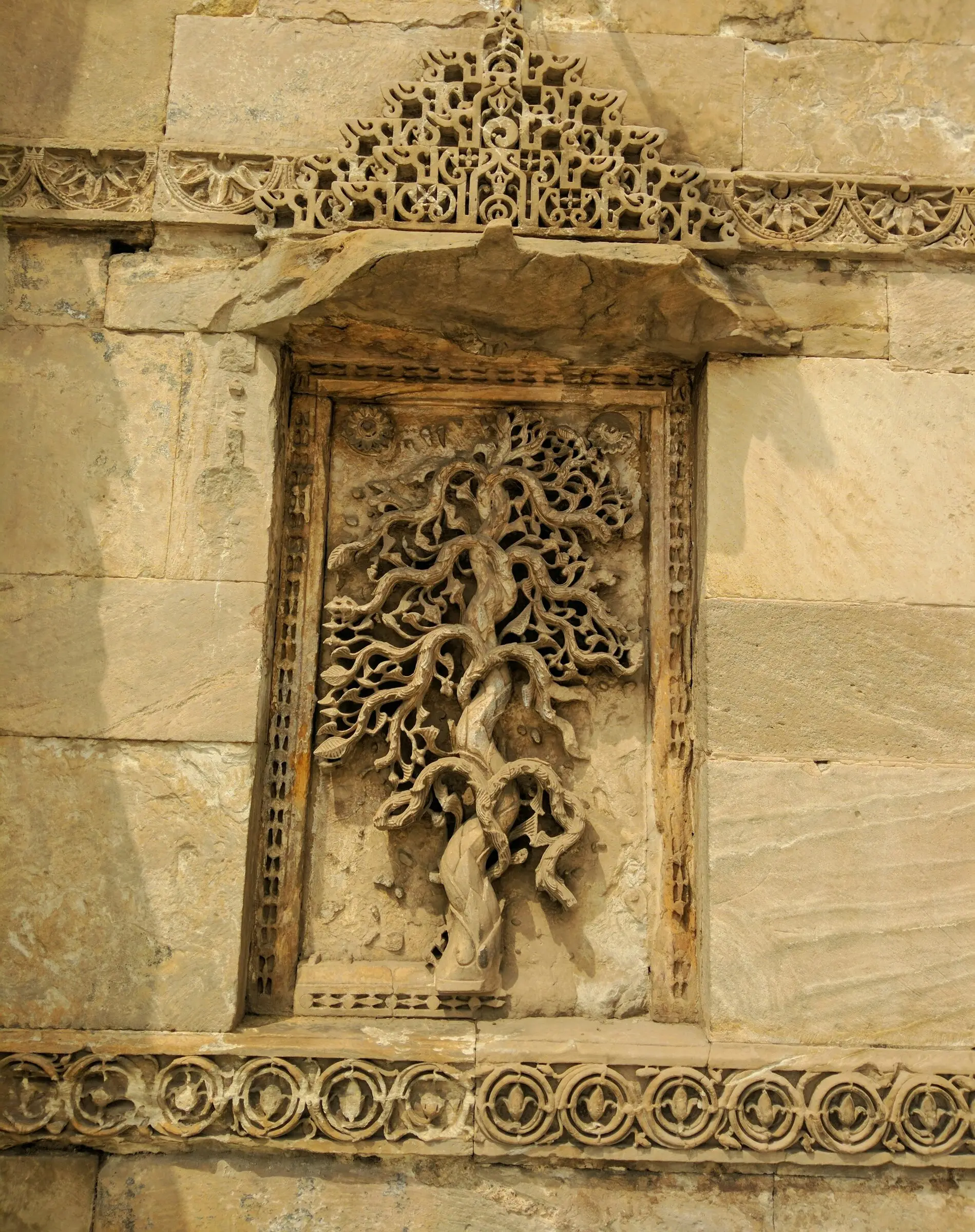
A significant share of British Indian families trace their roots to Gujarat, and we've built strong local relationships there specifically to support heritage and roots journeys: village visits, family record research, and introductions that a standard tour operator won't have.
Beyond heritage, Gujarat also offers strong textile and craft traditions and the Rann of Kutch's distinctive landscape.
The name
Gujarat takes its name from the Gurjaras, who ruled parts of western India between the 6th and 8th centuries. The land they held was called Gurjaratra, "the land protected by the Gurjaras", and over time that became Gujarat. Older texts know parts of it by other names, Saurashtra among them, which is still used for the peninsula today.
Places
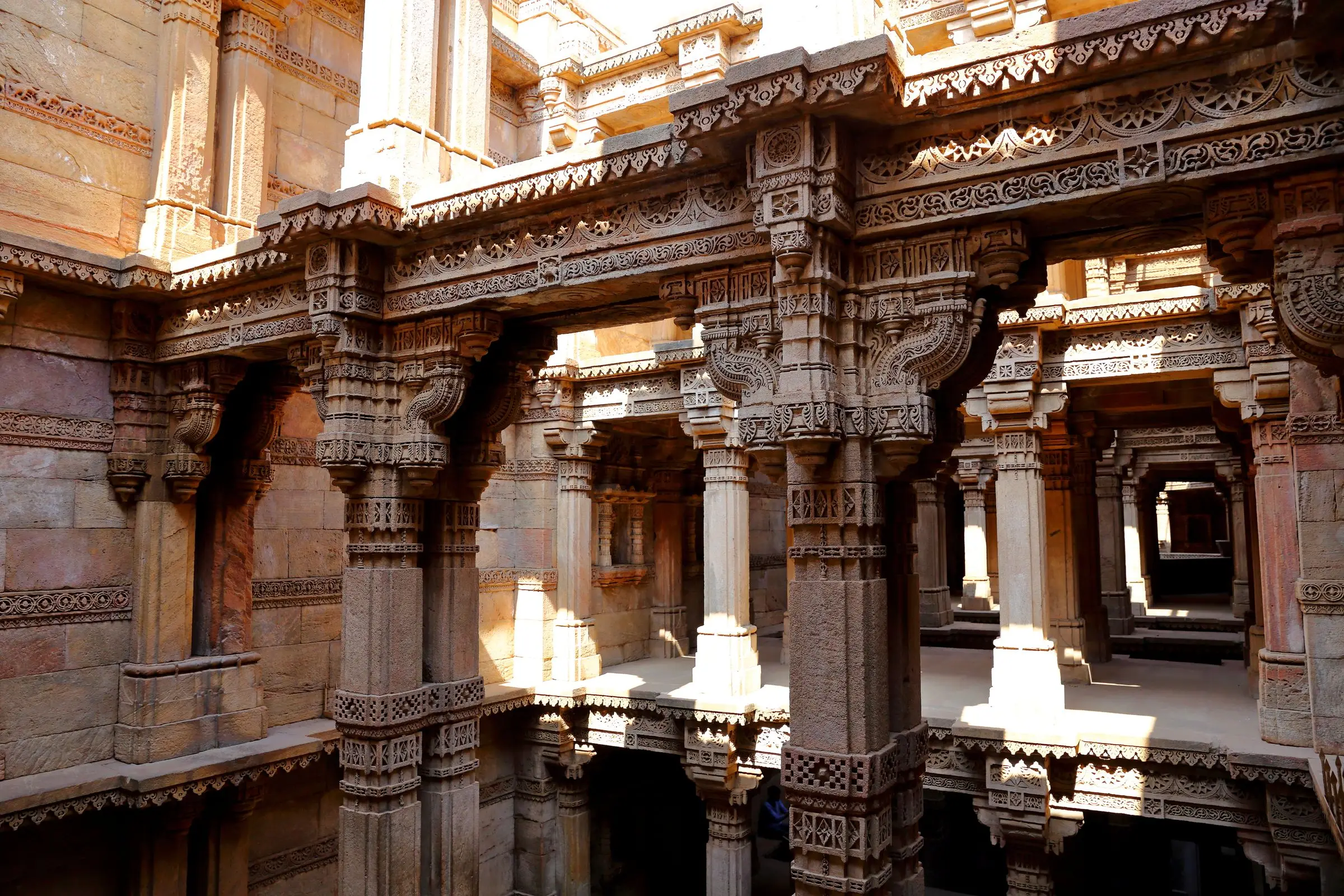
India's first UNESCO World Heritage City, founded in 1411. Walk the pols of the old city, see the Sidi Saiyyed jali, Sabarmati Ashram, the Adalaj stepwell and the Calico Museum of Textiles, then eat at Manek Chowk after dark.
The white salt desert near Bhuj, best under a full moon from Dhordo, with the craft villages of Hodka, Nirona and Bhujodi close by.
The only place in the world where Asiatic lions live in the wild, alongside leopards and crocodiles. Safaris run from Sasan Gir between mid-October and mid-June.
Somnath, the first of the twelve Jyotirlingas, on the sea front; and Dwarka, Lord Krishna's city and one of the four Char Dham, with Bet Dwarka island offshore.
An 11th-century stepwell with hundreds of carved figures, built by Queen Udayamati and now on the 100-rupee note. Patan is also the home of Patola silk.
A Solanki temple from 1026 with a beautiful stepped tank, aligned so the rising sun reaches the inner shrine at the equinox.
The great Jain pilgrimage: more than 800 temples crowning Shatrunjaya Hill, reached by over 3,000 steps.
Two more UNESCO sites: the mosques and hilltop Kalika Mata temple near Vadodara, and the excavated Harappan city of Dholavira in Kutch.
Lions at Gir, blackbuck at Velavadar, the Indian wild ass in the Little Rann (found nowhere else), coral reefs in the Marine National Park off Jamnagar, and flamingos and migratory birds at Nal Sarovar and in Kutch.
At the table
Dal, kadhi, vegetables, rotli, rice and sweets, balancing sweet, salty and spicy.
Steamed and rolled gram-flour snacks.
Spiced flatbreads for the road, and the classic Sunday breakfast.
A winter dish of mixed vegetables, traditionally cooked upside down in an earthen pot, eaten at Uttarayan.
The spicier cooking of Saurashtra: sev tameta, ringan no olo and bajra rotla.
Sweet strained yoghurt and thickened milk.
Timing
November to February. Gujarat gets seriously hot from March and the monsoon makes the Rann of Kutch impassable, so the window is narrower than Rajasthan's - and it is worth planning around Navratri, which the state does more thoroughly than anywhere else in India.
Jan
29-12 degrees Celsius, typical high and low
Ideal
Cool, dry and clear. Rann Utsav in full swing on the salt flats.
Feb
32-15 degrees Celsius, typical high and low
Ideal
The best all-round month. Comfortable for stepwells, cities and Gir.
Mar
36-19 degrees Celsius, typical high and low
Good
Warming fast. Early starts needed by the middle of the month.
Apr
40-24 degrees Celsius, typical high and low
Best avoided
Very hot. Gir remains open but the days are hard work.
May
41-27 degrees Celsius, typical high and low
Best avoided
Peak heat, often above 42C inland.
Jun
38-27 degrees Celsius, typical high and low
Best avoided
Hot and humid as the monsoon arrives. Gir closes mid-month.
Jul
33-25 degrees Celsius, typical high and low
Best avoided
Monsoon. The Rann floods and Gir is closed.
Aug
31-24 degrees Celsius, typical high and low
Best avoided
Wettest month. Gir still closed.
Sep
33-24 degrees Celsius, typical high and low
Good
Rain easing, Gir reopens around the middle of October. Navratri may fall late in the month.
Oct
35-21 degrees Celsius, typical high and low
Ideal
Season opens. Navratri usually falls here and transforms the whole state.
Nov
33-17 degrees Celsius, typical high and low
Ideal
Excellent. Clear, dry, Diwali and the Gujarati new year fall around now.
Dec
29-13 degrees Celsius, typical high and low
Ideal
Cool and bright. Rann Utsav under way, desert nights cold.
Usually late September or October
Nine nights of garba and dandiya raas, danced in courtyards and grounds across Gujarat until the early hours. Ahmedabad and Vadodara are the places to be, and nothing else in India is quite like it at this scale. For many of the families we plan for, being here for Navratri is the trip - so tell us early, because it is the single most requested week in the Gujarati calendar and accommodation goes accordingly.
Roughly November to February, on the Great Rann of Kutch
A tented festival on the white salt desert, with Kutchi crafts, music and full-moon nights on the flats. The Rann is only accessible in these months, so the window is not negotiable.
Mid-January
Gujarat's kite festival. The sky over Ahmedabad fills with kites from dawn and the rooftops become the venue. One of the easiest festivals to join with children, and one of the best.
Festival timings shift each year with the lunar calendar, so we have not published dates that would be out of date by the time you read them. See the full calendar for Gujarat, or tell us the year and we will confirm the dates for you.
Good to know
Journeys
Gujarat
Heritage · Wildlife
9 nights
Tell us about your family and what this trip means to you.